
Dental Implants
Dental Implants
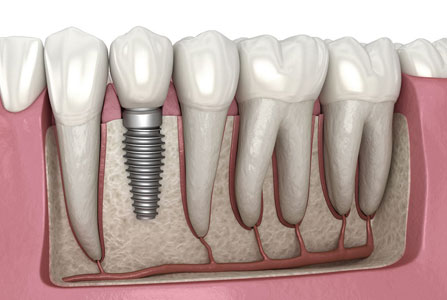
Dental implants are a modern, predictable, and long-term solution to replace missing teeth. They involve placing a biocompatible titanium implant into the jawbone, which acts as an artificial tooth root and supports a natural-looking crown.
Call Now! Book an Appointment!What is it?
Dental implants are a modern, predictable, and long-term solution to replace missing teeth. They involve placing a biocompatible titanium implant into the jawbone, which acts as an artificial tooth root and supports a natural-looking crown.
Unlike removable dentures or bridges, dental implants provide a fixed, stable, and natural-feeling restoration.
Most modern implants are made of titanium, which is biocompatible, allowing the bone to grow directly onto the implant surface in a process called osseointegration, ensuring long-term stability.
Common Symptoms / Indications
Dental implants are recommended when one or more teeth are missing due to:
- Missing teeth affecting smile and confidence
- Difficulty chewing certain foods
- Shifting or tilting of adjacent teeth
- Jawbone shrinkage causing facial changes
- Loose or uncomfortable dentures
Associated Conditions
Common underlying causes include:
- Severe periodontitis (gum disease)
- Extensive dental caries
- Oligodontia / anodontia (congenital absence of teeth)
- Facial trauma
- Failed root canal treatments
- Post tumor resection and reconstruction (including free flaps)
Screening & Diagnostic Assessment
A comprehensive evaluation ensures precision and safety:
- Dental X-rays (IOPA & OPG): Assess bone levels and adjacent teeth
- CBCT Scan (3D Imaging): Gold standard for implant planning; evaluates bone volume, nerve position, and sinus anatomy
- Digital Intraoral Scanning: Creates accurate 3D models for prosthetic planning
- Facial trauma
- Facial & Bite Analysis: Ensures functional and aesthetic outcomes
- Periodontal Assessment: Confirms healthy gums before implant placement
Advanced Planning: Digital Workflow & Implant Guide
Modern implant dentistry uses a fully digital workflow for precision:
- Digital Implant Planning Software: Allows virtual placement of implants in ideal positions
- Surgical Guide (Implant Guide): A custom-made template that helps place the implant with high accuracy, minimal invasiveness, and safety
- Prosthetic-Driven Planning: Implant position is planned based on final crown design for optimal aesthetics and function
This approach improves predictability, reduces surgical time, and enhances outcomes.
Am I Eligible?
Most adults are suitable candidates if:
- Adequate bone is present (or can be augmented with bone grafting)
- Gums are healthy
- Systemic conditions (e.g., diabetes, heart disease) are well-controlled
- Non-smoker or willing to reduce smoking
Procedure Overview
Step 1: Initial Assessment
Clinical examination, CBCT scan, and digital planning
Step 2: Tooth Removal & Bone Preparation (if required)
Extraction, bone grafting, or sinus lift if necessary
Step 3: Implant Placement
Titanium implant placed into the jaw under local anesthesia (or general anesthesia for complex/full-mouth cases)
Step 4: Healing Phase (Osseointegration)
3–4 months for the implant to integrate with bone
Step 5: Crown Placement
- Digital impressions or scans taken
- Custom-designed crown fabricated
- Crown fixed over implant using abutment
This restores full function, aesthetics, and bite alignment
Total Treatment Duration: Typically 3–5 months
We follow a staged protocol and do not routinely recommend same-day implants, as proper healing is essential for long-term success.
Pre & Post Care
Pre-Procedure:
- Medical evaluation and clearance (if required)
- Inform doctor about medications (especially blood thinners)
- Antibiotics may be prescribed
Post-Procedure:
- Soft/liquid diet initially (dal, khichdi, idli, mashed foods)
- Avoid chewing on implant site
- Maintain oral hygiene (avoid brushing surgical area for 24 hours)
- Use prescribed mouth rinse/saltwater
- Avoid smoking and use of straws
- Mild pain can be managed with medications like Ibuprofen
Hospitalization
- Usually a day-care (outpatient) procedure
- Procedure time: 1–2 hours
- Recovery: 30–60 minutes
- Hospital stay: Not required (may be needed in complex/full-mouth cases)
Benefits of Dental Implants
- Natural appearance and function
- Improved chewing and speech
- Bone preservation (prevents facial collapse)
- Long-lasting and durable solution
- No damage to adjacent teeth
- Improved confidence and quality of life
Risks (Rare)
Dental implants have a success rate of >95%, but minor risks may include:
- Infection
- Delayed healing
- Implant failure (rare)
These risks are minimized with proper planning and post-operative care.
Disclaimer
Treatment duration and protocol may vary depending on complexity, bone condition, and systemic health, especially in full-arch rehabilitation or medically compromised patients.